KinKeeper
Transforming a healthcare application from a mandatory task into a fun and epic experience through gamification.
Context
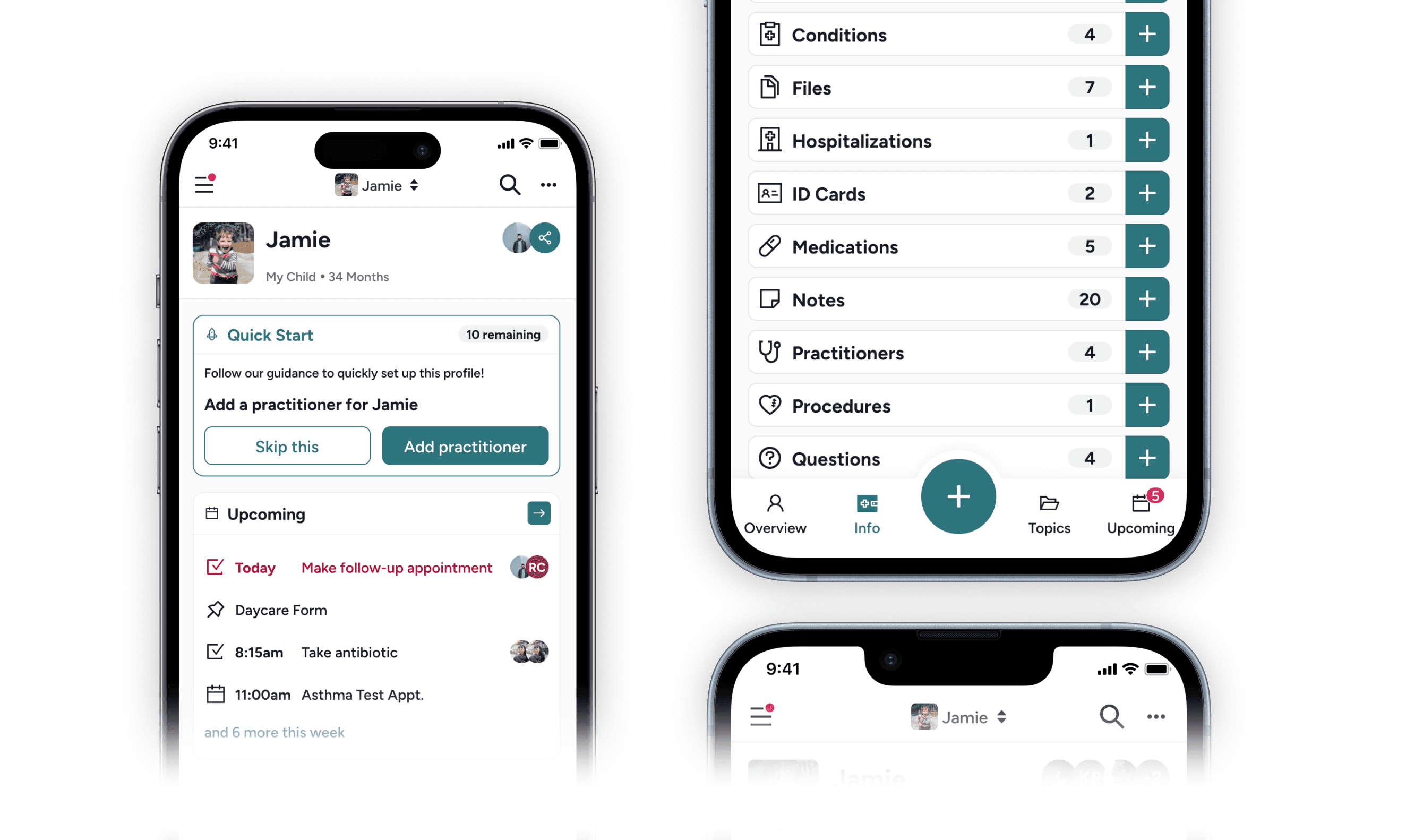
Kinkeeper is a family health coordination app designed to reduce the everyday burden of caregiving caused by busy families juggling medications, appointments, behaviors, and numerous small tasks, many of which get lost across Apple Notes, text threads, and memory.
But centralization alone didn’t solve the real challenge: people were still too busy, stressed, or forgetful to log updates consistently. To address this, a simple engagement loop through gamification is introduced to make health tracking feel easier, more rewarding, and more consistent.
Timeline
2 Months
Industry
Healthcare
Role
UX Designer
Tools
Figma, Miro
Impact
10% hike in retention after gamification made the app feel purposeful not a task.
Type
Mobile Application (IOS, Android)
What's the current situation?
Despite Kinkeeper centralizing health tasks and updates into one place, families still struggled with consistency logging of activities, tracking changes, and staying engaged over time. Usage patterns showed that most users created a profile but rarely maintained it.

Kinkeeper solved organization, not the behavioral burden of daily caregiving.
What's the approach?
The core issue wasn’t a lack of features, it was a lack of motivation. This is being approached through gamification, but just not any gamification. This is going to drive the user to experience the process purposeful rather than chore-like.
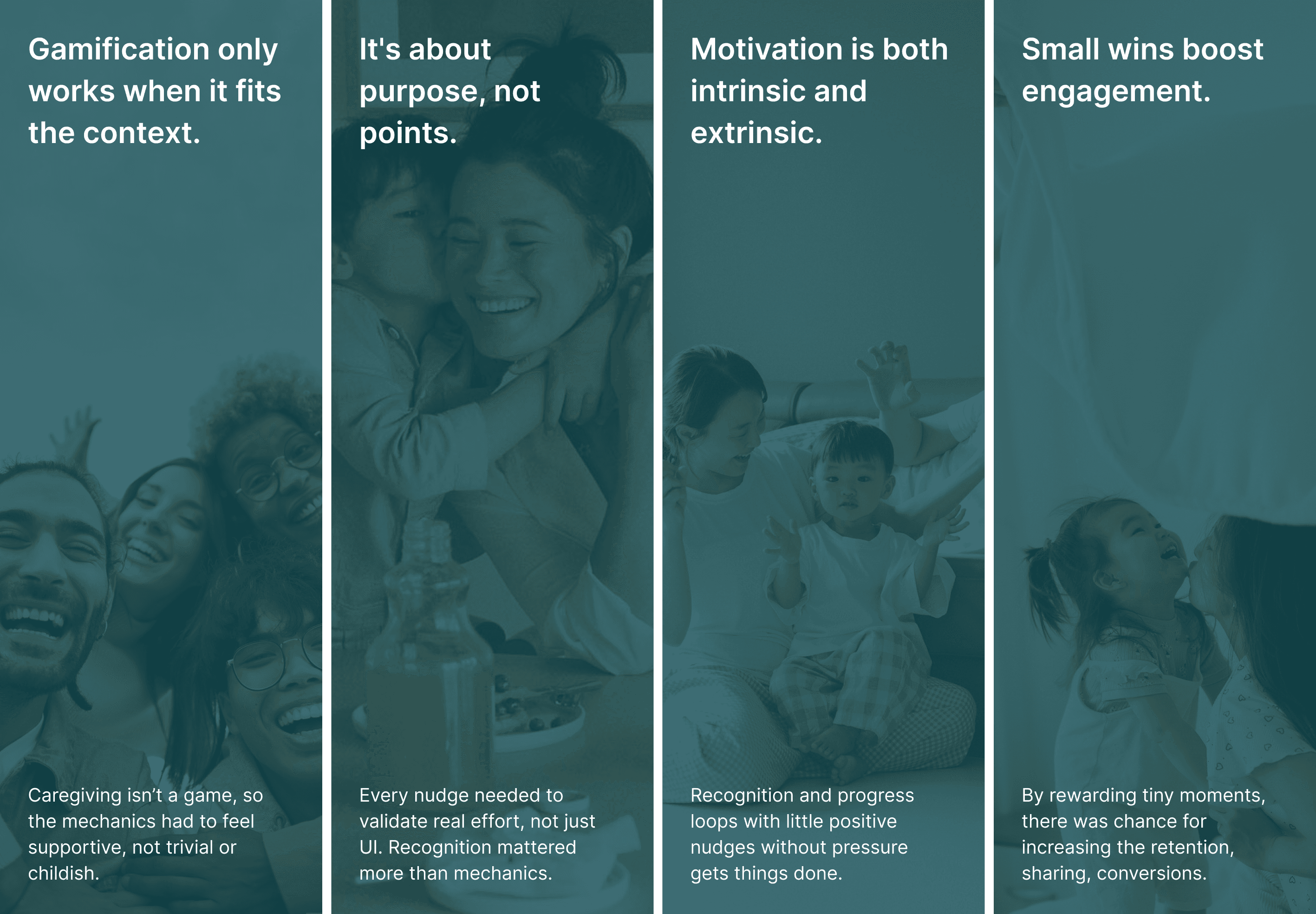
Start with motivation, not mechanics
Point is to reduce friction and create an emotional connection that encourages users to return willingly.
Transform tasks into purposeful progress
Instead of treating daily responsibilities as checkboxes, we turn them into meaningful achievements.
Gamification to build identity
Gamification creates a narrative, making users feel they're crafting a story instead of doing a chore.
Consistency = Reward, not draining
Result - users stay engaged because the experience feels good, not guilt-driven.
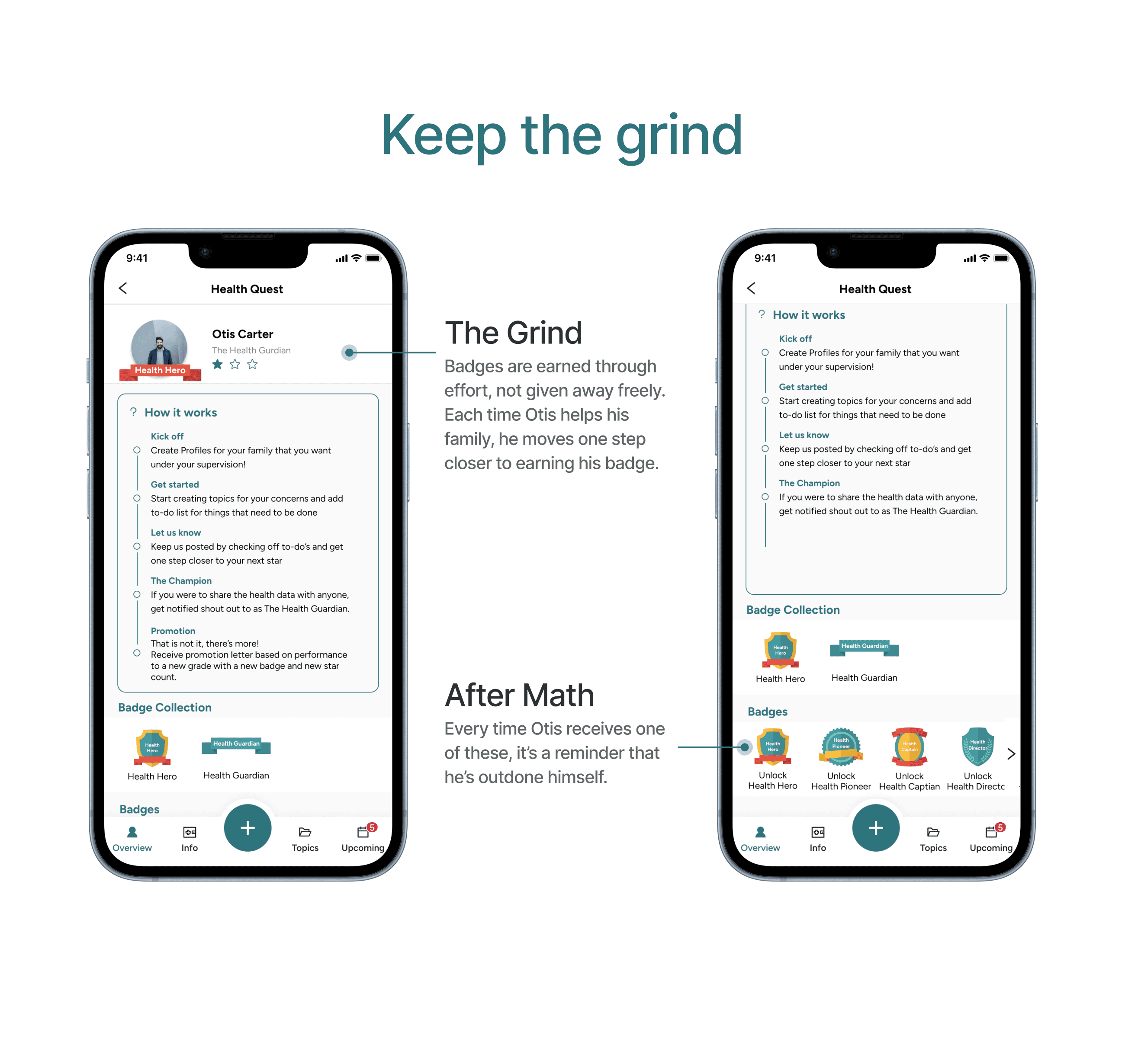
Meet Otis
Meet Otis, a full-time marketing manager and part-time family health CEO. He’s juggling two kids, a dog with opinions, and a calendar that looks like a battlefield.
He wants managing everyone’s health to feel like an adventure, not boring admin work. He tends to lose interest the second things get repetitive or messy.

So how do we give Otis what he needs?
Opportunity
Well, the goal is simple ~ make them feel epic!
The app assigns a role to the user who takes care of the family, giving them an epic sense of purpose and making them feel like they are part of something bigger than themselves.
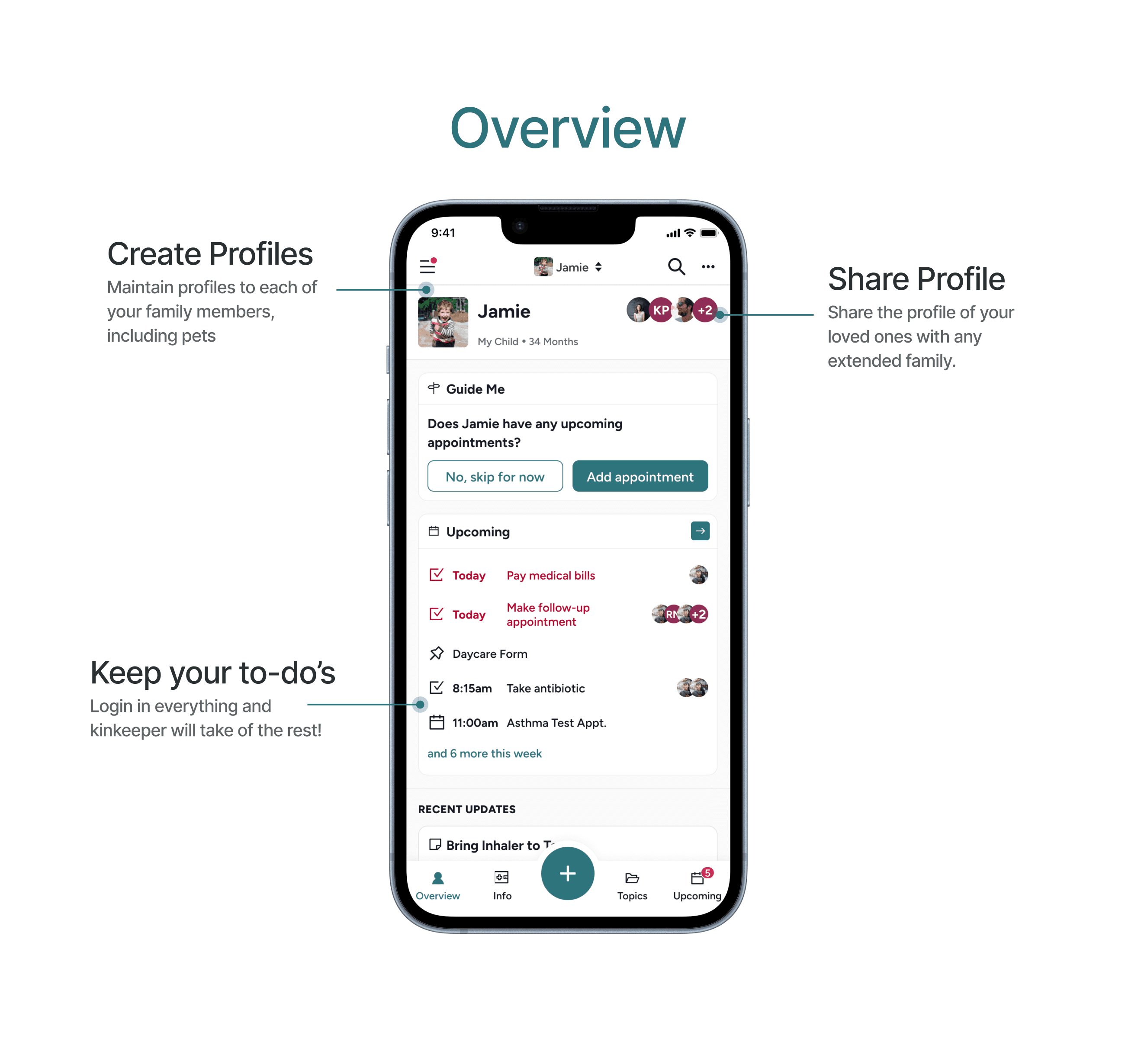
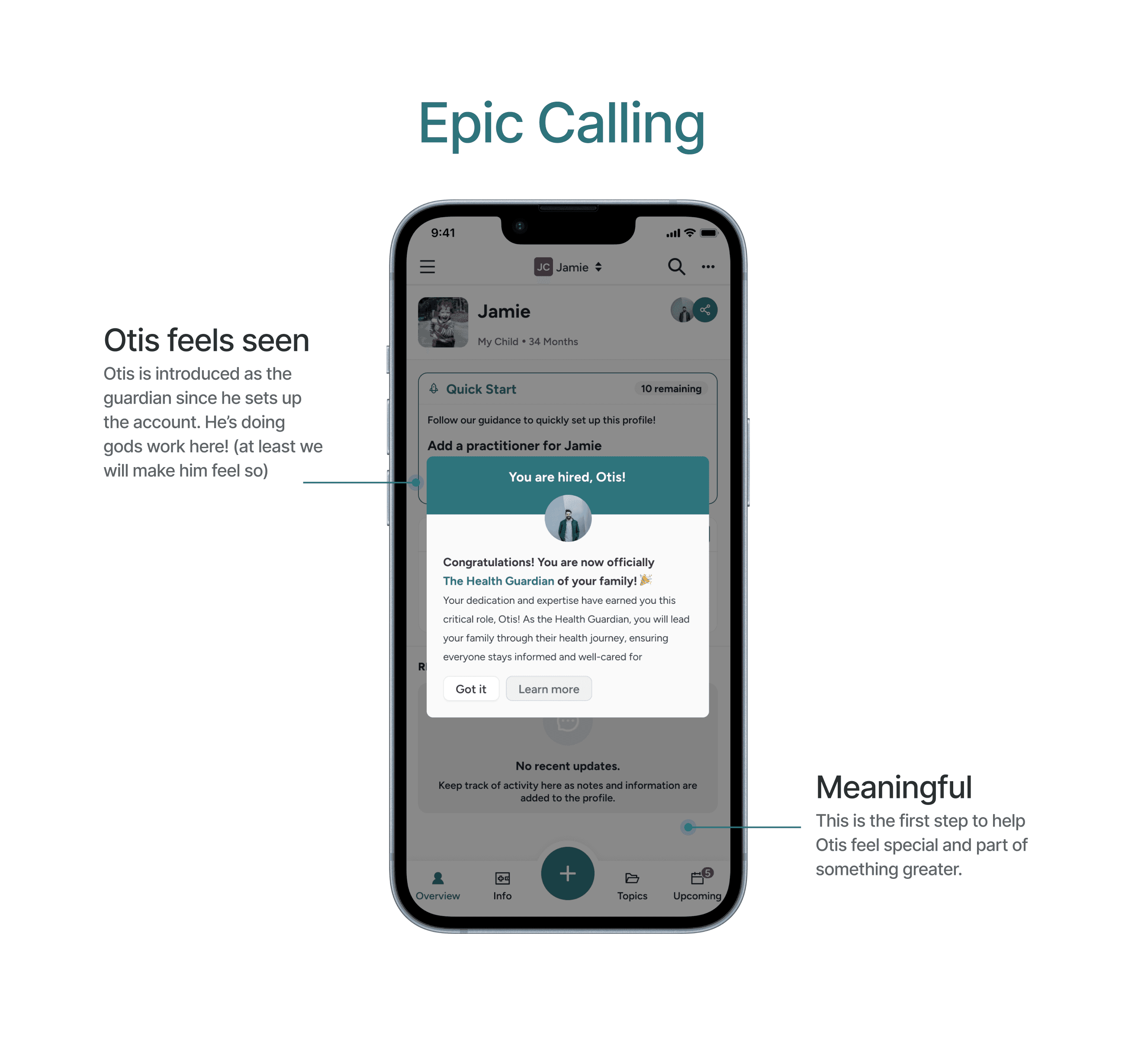
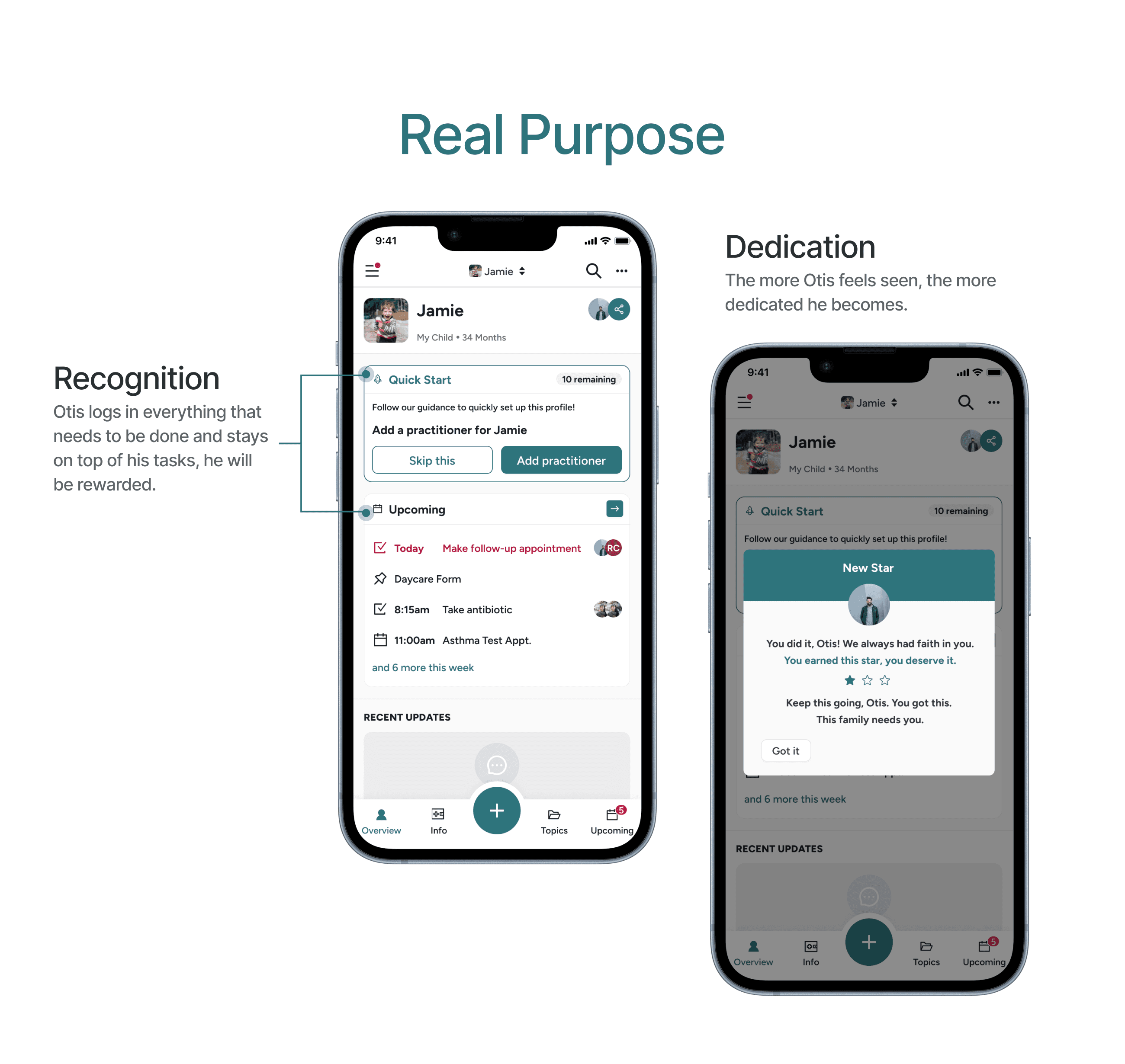
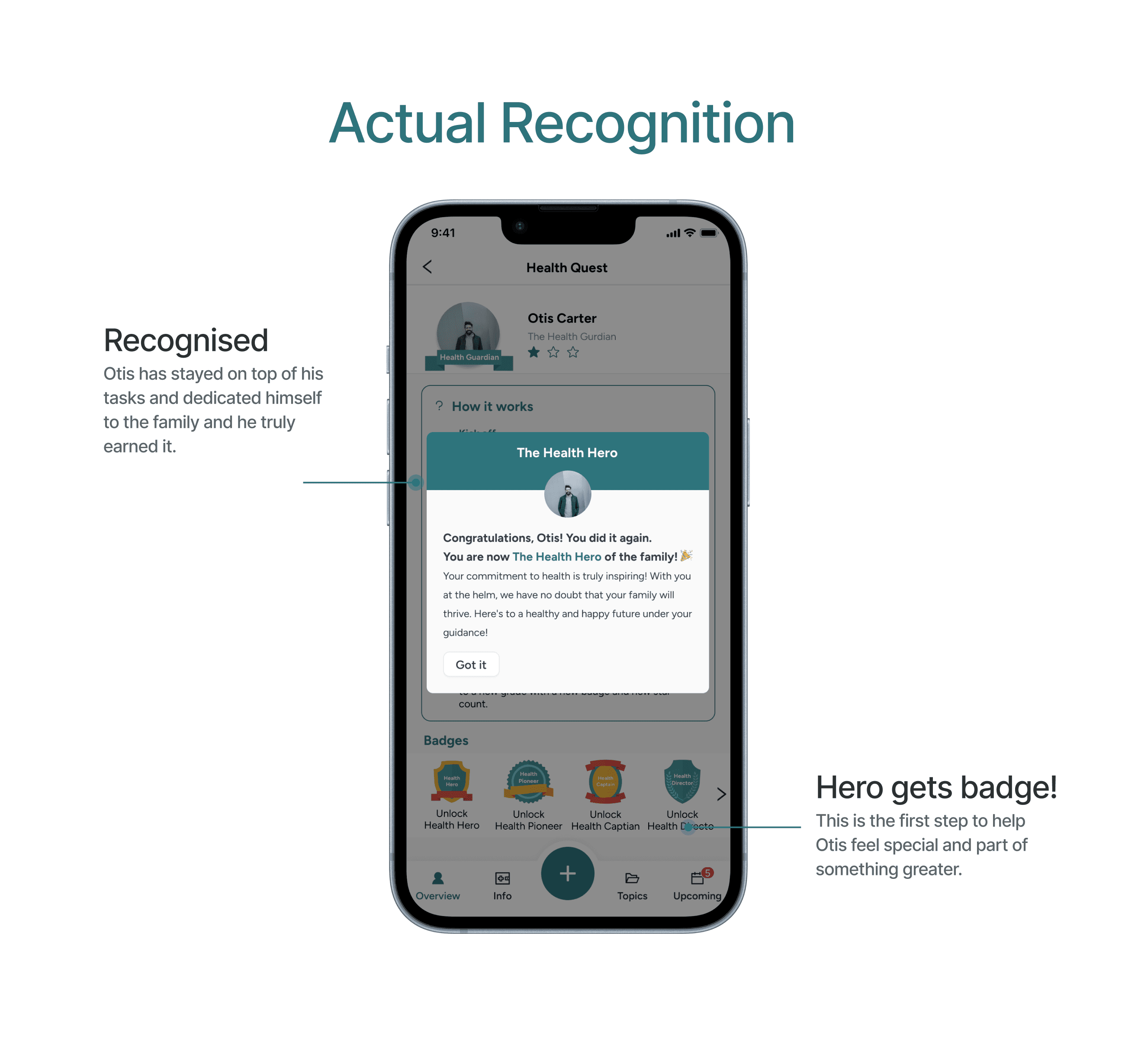
Impact
The result? Gamification didn’t just make Kinkeeper more fun, it made it stick.
Users shared more, returned more, upgraded more, and finally felt rewarded for the invisible work of caregiving.
Virality & Shares
23%
increase in shares after introducing celebratory milestones
Higher Monthly Active Users (MAU)
10%
hike in retention rate after weekly motivational loops made the app feel purposeful not a chore.
Premium Conversion
8%
Users who completed even 1 milestone were 4× more likely to subscribe.
Positive Reviews Boost
46%
Increase in the rating pushing from 3.4 → 4.7, improving acquisition.
Key Takeaways
Designing motivation > designing more features.
Gamification worked because it respected the emotional reality of caregiving, not because it added “fun” elements. When rewards felt meaningful, consistency naturally followed.